Cape Cod on a Real Budget: How to Have an Amazing Trip Without the Sticker Shock
Let's be honest — Cape Cod has a bit of a reputation. Shingled cottages with ocean views, lobster rolls that cost as much as a tank of gas, boutique inns where the nightly rate makes you do a double-take. If you've been putting off a Cape trip because you assumed it was out of your price range, you're not alone.
But here's the thing: that version of Cape Cod is real, and so is a completely different one. The Cape that locals actually live in — the one with free beach days, $12 fish tacos, roadside farm stands, and state park campgrounds where you fall asleep to the sound of crickets — that version exists too. You just have to know where to look.
This is your guide to that Cape Cod.
Time Your Trip Right and Watch the Prices Drop
If there's one single thing that will save you more money than anything else on this list, it's this: don't go in July or August. Peak summer on the Cape means peak prices — for accommodations, restaurants, parking, and pretty much everything else. Shoulder season is where the value is.
Late May and early June are genuinely underrated. The weather is mild, the crowds are thin, and you can often find motel and inn rates that are 30 to 50 percent lower than what you'd pay over the Fourth of July weekend. September is even better in some ways — the water is at its warmest, the tourist rush has faded, and locals are happy to see you. Early October brings stunning light, quieter roads, and a whole different kind of beauty to the landscape.
If summer is non-negotiable for your family, aim for the very beginning or very end of the season. The week after Labor Day, in particular, is a sweet spot that budget travelers should absolutely have on their radar.
Where to Stay Without Overpaying
Forget the idea that affordable accommodations mean sacrificing comfort or location. There are solid options at every price point if you know what to look for.
State park campgrounds are the crown jewel of budget lodging on the Cape. Nickerson State Park in Brewster is one of the best campgrounds in all of New England — it's got nearly 400 sites, freshwater ponds for swimming, miles of biking trails, and a setting that honestly doesn't feel like roughing it. Rates are a fraction of what you'd pay for a motel room, and the experience is hard to beat.
Motels along Route 28 get a bad rap, but many of them are perfectly clean, well-located, and priced reasonably — especially if you book directly rather than through a third-party site. A basic room near Hyannis or Dennisport can run $100 to $150 a night in shoulder season, and you're never far from the action.
Vacation rental platforms can work in your favor if you're traveling with a group or family. Splitting a cottage four ways often comes out cheaper per person than booking separate hotel rooms, and you get a kitchen — which is a huge money-saver when it comes to meals.
Hostel and shared accommodations options are limited on the Cape, but they do exist, particularly in Provincetown. If you're a solo traveler or a couple comfortable with a more social setup, it's worth checking what's available.
Free and Almost-Free Things to Do (That Are Actually Great)
Here's where Cape Cod really shines for budget travelers: so much of what makes it special costs nothing at all.
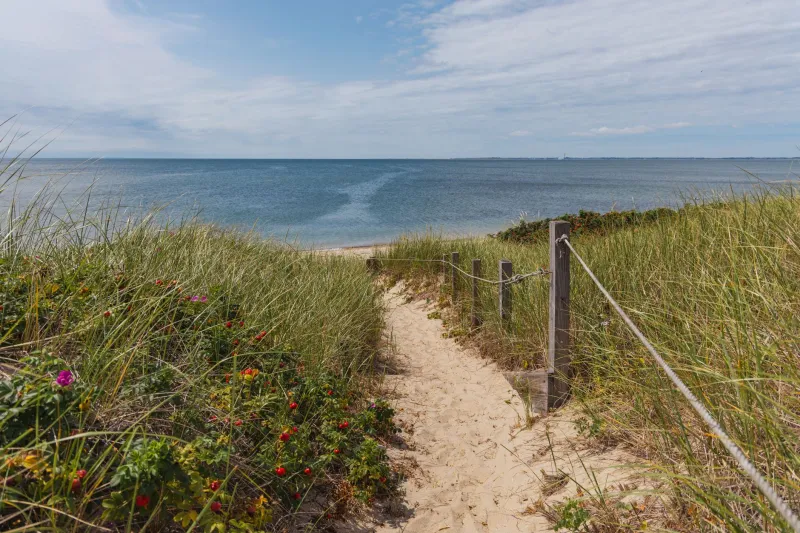
The Cape Cod National Seashore is one of the most spectacular stretches of coastline on the East Coast, and most of it is free to access outside of the peak summer parking fee season. The fee itself is modest — a weekly vehicle pass runs around $35, which is reasonable if you're spreading it across several beach days. But if you're willing to arrive early, bike in, or use the free parking areas and walk a short distance, you can enjoy these beaches without paying a dime.
The Cape Cod Rail Trail is free to use and runs 25 miles from Dennis to Wellfleet through some genuinely beautiful scenery. Rent a bike from one of the outfitters along the route (rates are usually $25 to $35 a day) and you've got a full day of activity that doubles as your sightseeing.
Provincetown is one of those places where just walking around is its own form of entertainment. Commercial Street is endlessly people-watchable, the art galleries are free to browse, and the fishing pier is a great spot to spend an hour watching the boats come and go. The Pilgrim Monument is worth the small admission fee, but the town itself doesn't cost you anything to enjoy.
Free concerts and town events pop up all summer long across the Cape. Chatham has its famous Friday night band concerts on the town green — they've been running for over a century and they're completely free. Many towns host outdoor movie nights, farmers markets, and festivals that don't require a ticket.
Eating Well Without the Seafood Restaurant Markup
Let's talk food, because this is where a lot of Cape Cod trips go sideways budget-wise. A sit-down seafood dinner for two can easily run $100 or more, and that adds up fast.
The workaround? Clam shacks and takeout windows. These are where locals actually eat, and the quality is often just as good — sometimes better — than the fancier spots. A lobster roll at a no-frills roadside window, eaten at a picnic table with a paper cup of chowder, is a quintessential Cape experience that won't cost you $40 a plate.
Farm stands are scattered all over the mid-Cape and lower Cape, and they're a fantastic way to eat well cheaply. Fresh corn, tomatoes, local honey, eggs, and baked goods — you can put together a genuinely great meal for next to nothing.
Grocery store deli sections in towns like Orleans, Falmouth, and Hyannis stock prepared foods, fresh fish, and local products at prices that make restaurant dining look extravagant. Pick up some fresh fish, cook it at your rental, and you've just had a better meal than most tourists on the Cape that night.
Happy hour is your friend. Many Cape restaurants offer discounted appetizers and drinks during late afternoon hours — it's a great way to sample a nicer spot without committing to a full dinner bill.
The Mindset Shift That Changes Everything
The most important thing to understand about budget travel on Cape Cod is that the things that actually make the Cape special — the light on the water in the late afternoon, the smell of salt air and pine, the unhurried pace of a small-town summer — none of that costs money. The premium you pay for luxury accommodations and high-end dining is real, but what you're buying isn't the Cape experience itself. It's a particular layer on top of it.
Strip that layer away, and what you're left with is still pretty remarkable. A morning walk on a nearly empty beach. A fish sandwich from a shack with four picnic tables. A bike ride through a cranberry bog. Watching the sun go down over Cape Cod Bay with a cold drink from a convenience store.
That's the Cape Cod that doesn't require a big budget. It just requires knowing it's there.