Before It's Gone: Cape Cod's Most Important Historic Places and the Stories They Hold
There's a version of Cape Cod history that gets told constantly — the Pilgrims landing at Provincetown, the whaling era, the old sea captains' houses in Brewster. It's not wrong, exactly, but it's incomplete in ways that matter. The fuller story of this place stretches back more than ten thousand years, runs through communities that have been systematically overlooked, and includes structures and landscapes that are disappearing faster than most people realize.
This isn't a list of museums to dutifully check off. It's an invitation to engage with a place that has more layers than the tourist brochures suggest — and to do it while the opportunity still exists.
The Wampanoag Story: History That Predates Everything Else
Before the Pilgrims, before the Portuguese whalers, before any European presence on this peninsula, the Wampanoag people lived here. They'd been here for millennia. The Cape Cod we visit today sits on Wampanoag land, and that history is not ancient in the sense of being remote — the Wampanoag Nation is very much alive and present.
The Wampanoag Tribe of Gay Head (Aquinnah) on Martha's Vineyard and the Mashpee Wampanoag Tribe are the two federally recognized tribal nations with deep ties to this region. The Mashpee Wampanoag Tribe's history is inseparable from the Cape's history, and Mashpee itself is worth visiting with that context in mind.
The Old Indian Meeting House in Mashpee is believed to be the oldest surviving church building in Massachusetts, constructed in 1684 as a gathering place for the Indigenous Christian community of the time. It's a complicated artifact — a structure that reflects both the coercion of colonial missionary activity and the Wampanoag community's persistent survival and adaptation. Visiting it without that context is missing the point.
The Mashpee Wampanoag Museum offers a more direct engagement with tribal history and culture. It's a small institution, but it's doing important work, and supporting it matters.
The Maritime World That Built This Place
Cape Cod's relationship with the sea produced one of the most distinct regional cultures in American history — and also one of the most dangerous occupations the country has ever known. The waters off the Outer Cape are among the most treacherous on the Atlantic coast. The number of ships lost here over four centuries is staggering.
The Cape Cod Maritime Museum in Hyannis addresses this history thoughtfully, but some of the most evocative connections to the maritime past are found in less obvious places. The old saltworks ruins scattered across the mid-Cape represent an industry that once dominated the local economy — salt production was Cape Cod's major export before fishing took over, and traces of those operations are still visible if you know what to look for.
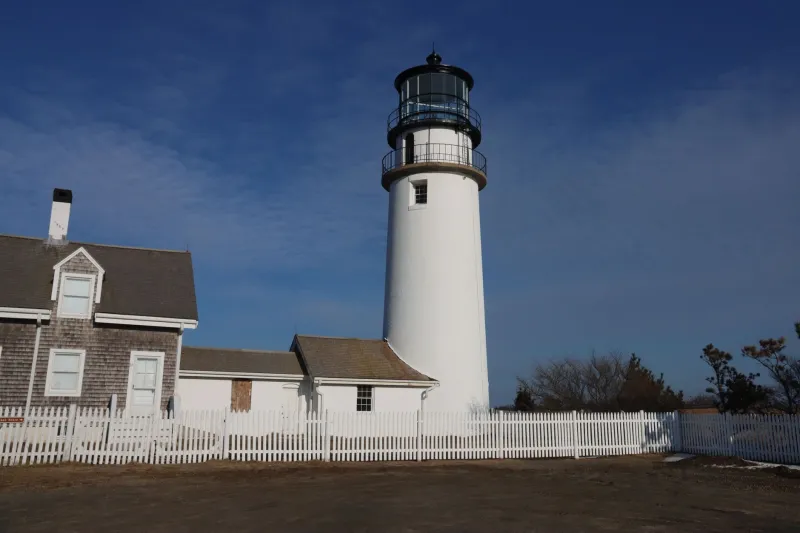
The Highland Light area in Truro sits at the edge of a dramatically eroding cliff — the same cliffs that made this stretch of coast so deadly to sailing vessels. Standing there and looking out at the Atlantic, it's not hard to understand why more ships have wrecked off Truro than almost anywhere else on the East Coast. The Truro Historical Society maintains the Highland House Museum nearby, which holds artifacts and stories from this era that deserve more attention than they typically get.
The Outer Cape's Endangered Architecture
The Cape has a distinctive architectural vernacular — the half-Cape, the full Cape, the Greek Revival sea captain's house — that developed over generations in response to climate, available materials, and the particular needs of fishing and maritime families. Many of these structures are in various states of decline, and the economic pressures of a high-demand real estate market don't favor preservation.
Brewster has one of the highest concentrations of intact 19th-century sea captain's homes in the country, many of them still standing along Route 6A — the Old King's Highway, which is itself a historic corridor worth driving slowly rather than treating as a throughway. The Brewster Historical Society maintains resources for understanding what you're looking at as you move through the town.
In Wellfleet, the town pier area and surrounding commercial district retain architectural elements that have largely been lost in more aggressively developed Cape towns. Wellfleet's oyster industry history is embedded in the physical landscape here in ways that reward slow attention.
The Life-Saving Stations: Courage Made Concrete
One of the Cape's most underappreciated historical chapters involves the United States Life-Saving Service — the precursor to the Coast Guard — which operated a series of stations along the Outer Cape to rescue survivors of the constant shipwrecks. The surfmen who staffed these stations performed extraordinary acts of bravery under conditions most people can barely imagine.
Several of these station buildings still stand, in varying states of preservation. The Old Harbor Life-Saving Station in Provincetown was literally moved — floated by barge around the tip of the Cape — to save it from erosion, and now operates as a museum with demonstrations of rescue techniques during the summer season. It's one of the more unusual and worthwhile historic experiences on the Cape.
The National Seashore has incorporated the history of these stations into its interpretation, but the stories deserve deeper engagement than a roadside marker can provide. The American Life-Saving Service Heritage Association is a resource for anyone who wants to go further.
Provincetown's Layered Past
Provincetown is marketed primarily as a destination for its arts scene and LGBTQ+ culture — both legitimate and important — but its history as the actual first landing point of the Mayflower is chronically underemphasized. The Pilgrims spent five weeks in Provincetown harbor before moving on to Plymouth, and the town's Pilgrim Monument commemorates this, though the monument itself is more impressive than the interpretation around it.
More interesting, to many visitors, is Provincetown's history as a Portuguese fishing community — a story that's woven into the town's food culture, architecture, and family names but isn't always visible to people who don't know to look for it. The Provincetown Portuguese Festival in June is one of the more authentic cultural celebrations on the Cape.
Why This Matters Right Now
Cape Cod's historic fabric is under genuine pressure. Rising sea levels are threatening coastal structures and archaeological sites. Development economics favor demolition over preservation. Institutional memory fades as older generations pass on.
Visiting these places isn't just tourism — it's participation in a form of cultural maintenance. The historical societies and preservation organizations doing this work are largely volunteer-driven and perpetually underfunded. Membership, donations, and simple attendance all make a difference.
The Cape's history is long, complicated, and worth understanding on its own terms. The best way to start is to show up somewhere that hasn't been polished for easy consumption, and stay long enough to actually hear what it's saying.